Why clarity is becoming a commercial advantage
The projects that succeed won’t necessarily be the biggest or boldest, they’ll be the ones with the clearest proposition, writes Andrew Hoyne in his latest insights piece.
When Charter Keck Cramer released its latest State of the Market H1 2026 report earlier this month, the headlines were familiar: construction costs remain high, feasibility is under pressure, capital is becoming more selective, buyers are more cautious and governments want more housing, but many approved projects still aren’t making it out of the ground.
For anyone working in property, none of this comes as a surprise. Risk is at the top of every developer’s mind. Given the financial, political, labour and consumer climate, why wouldn’t it be? But as I read the report, I couldn’t help thinking there was a bigger story hiding between the charts. Risk hasn’t just increased, it’s changed.
For years, development risk was largely about the tangible things: planning approvals, finance, construction costs, programme, procurement. They still matter deeply of course, but today, another form of risk is emerging, one that’s harder to quantify yet often has an even greater impact on a project’s success. It’s the risk of irrelevance. We’ve already seen this harsh reality to come to life with full force when the thousands of poorly considered, investor-grade apartments in Melbourne remained unsold in the post-COVID years.
Why would anyone care about what you’re building? Not just enough to buy it but enough to believe in it, invest in it or champion it. Because in today’s market, that’s the question every project has to answer.
Confidence has become a commercial asset
The Charter Keck Cramer report makes it clear that demand for housing hasn’t disappeared. The challenge is confidence, specifically investor, buyer and community confidence. When people feel uncertain, they become more selective, they ask harder questions, and they take longer to make decisions. What they’re looking for is reassurance that a project will deliver on its promise and create genuine value. Which is why simply having a feasible project is no longer enough, you also need a compelling reason for people to choose it.
Every project has risk. The best projects create confidence.
To my mind, one of the biggest misconceptions is that place strategy, storytelling and branding begin once the masterplan is complete or when it’s time to prepare a sales campaign. The strongest projects establish a clear vision from the outset. They define what success looks like before design decisions are made, before names are chosen and before marketing begins. They answer the questions that every stakeholder will eventually ask, like why does this place deserve to exist? Who is it for? What role will it play in its neighbourhood? How will it create value that extends beyond its boundaries?
Ideally, for the greatest benefit, that clarity is captured at the earliest stages in a Placebook or a Place Visioning process, but sometimes it happens later when you come to create the brand narrative. What matters is that everyone knows what they’re working towards and can understand why it’s worth being a part of. That understanding underpins every design decision, shapes customer experience, informs investment decisions and gives every consultant, stakeholder and decision-maker a common direction.
Like anyone setting out into the wilderness, you need more than a destination, you need a map. Without one, every decision becomes harder.
Vision doesn’t remove risk. It gives people confidence to navigate it.
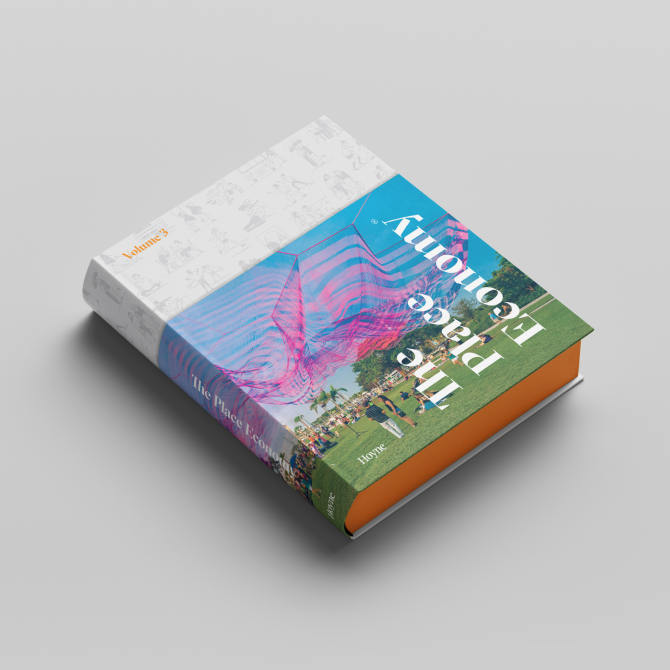
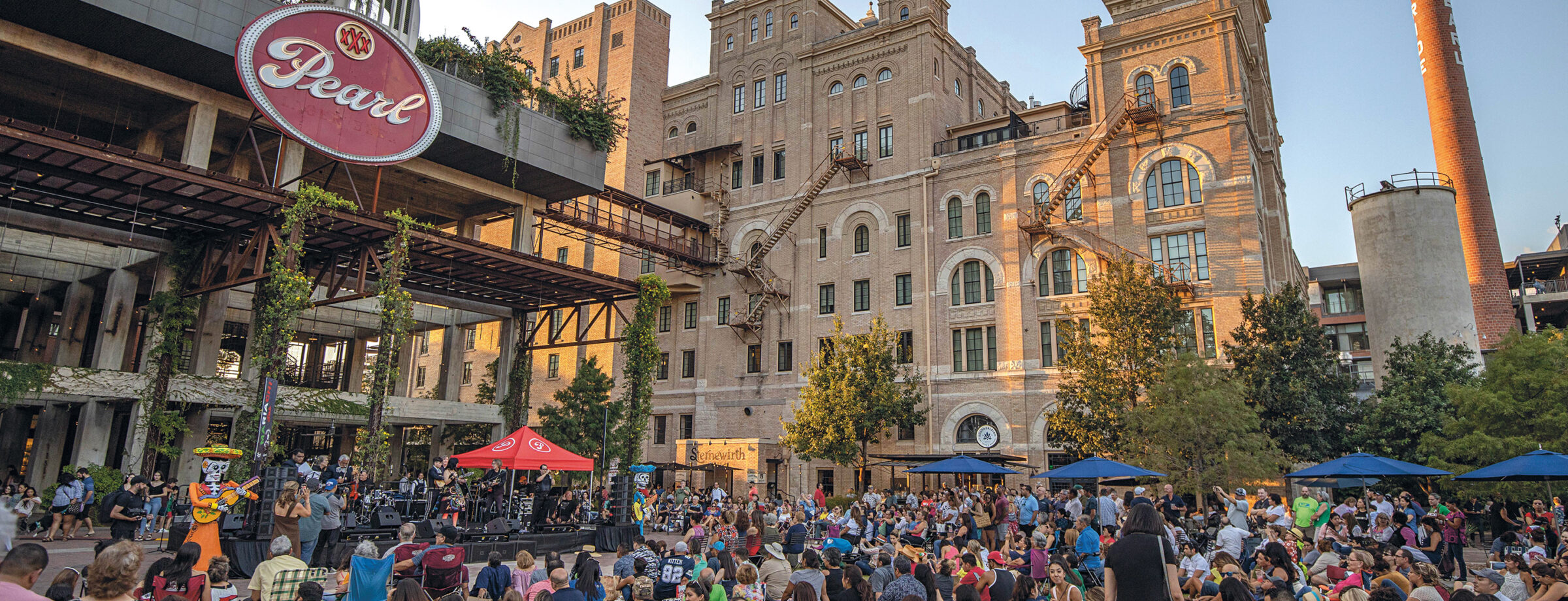
One of my favourite examples of this comes from Pearl in San Antonio, which has a current value in excess of $2.3 billion. When I interviewed former CEO Mesha Millsap for The Place Economy, she reflected on the early years of transforming the historic brewery into one of America’s most celebrated mixed-use destinations. Restoring the existing buildings came at a significantly higher cost than building new, and there were moments when the commercial reality prompted questions about the margins but the team never lost sight of the vision. As Mesha put it, “There were definitely times when I questioned the margins or the risk, but the commitment to vision and purpose was compelling.” That observation has stayed with me. The vision didn’t remove the commercial risk. It gave the team confidence to navigate it. It aligned shareholders around a long-term outcome, gave the project permission to evolve and ultimately created something far more valuable (socially and financially) than the safest commercial decision ever could.
No amount of branding will rescue an unviable project. Likewise, no Place Vision can overcome poor economics. But clarity can reduce uncertainty. It gives investors greater confidence that a project occupies a distinctive position in the market. It helps planning authorities understand the long-term contribution a development will make to its community. It enables sales teams to tell a story that goes beyond floorplans and finishes. And it gives future customers something increasingly valuable: confidence that they’re investing in a place with purpose.
The projects that succeed will be the ones people understand
One of the strongest themes running through the Charter Keck Cramer report is that we’re entering a more disciplined market where capital is harder to secure, projects need stronger fundamentals and customers are more discerning. I’d argue that development has become more demanding not just financially, but strategically. In that environment, being different for the sake of being different isn’t enough. Projects need to instil confidence immediately. So, the developments that secure investment, gain planning support and achieve stronger sales or leasing outcomes won’t necessarily be those with the biggest budgets or the boldest architecture they’ll be the ones with the clearest proposition.
Developers have always managed risk, what’s changing is where that risk now sits. It’s no longer enough to ask whether a project can be built; the more important question is whether people believe it should be. Because today, the projects that succeed won’t simply be the ones that stack up on a feasibility spreadsheet, they’ll be the ones that give people a reason to believe and a reason to put their hand in their pocket.
What could greater clarity unlock for your project?
Hoyne works with developers, governments and project teams to establish the vision, purpose and proposition that give places a clear direction, from the earliest stages of development.
Explore Placebook® and Place Visioning® →
Back