We’re building more homes than ever. But are we building places people will remember?
In his latest piece, Hoyne's Head of Place Strategy Tom Oliver Payne explores what makes the places we love impossible to forget, and what it means for the way we're building now.
I often find myself looking at Sydney’s Coca-Cola sign and wondering how on earth it became a landmark.
By any rational measure, it shouldn’t be. It isn’t a civic building. It doesn’t commemorate a historical event. It isn’t particularly beautiful. It is, after all, a giant illuminated advertisement perched above one of the city’s busiest intersections. If someone proposed it today, there would almost certainly be a community consultation, a design review panel, a heritage impact statement and several earnest LinkedIn posts explaining why it was a terrible idea.
Yet somehow it has become part of Sydney. For generations, Sydneysiders have used it as a point of orientation and a place to meet. It appears in films, postcards and tourist photographs. Like many urban oddities, it has transcended its original purpose and slipped quietly into the city’s collective memory. The sign’s significance has very little to do with Coca-Cola and everything to do with meaning.
This is often how cities work. The places we love are rarely remembered simply because they function well. They are remembered because they mean something. They are places that have absorbed decades, sometimes centuries, of human life. Layers of memory settle into streets and buildings, different generations leave their mark, uses change, buildings are adapted, stories accumulate. Over time, places acquire a depth that transcends the intentions of their original designers.
Walking through Rome, one becomes aware that every surface seems to contain traces of previous lives. Ancient ruins sit alongside contemporary apartments. A church occupies the footprint of an earlier temple. The city feels meaningful not because every building is extraordinary, but because every building contributes to a larger story.
London operates in a similar way. What makes places such as Soho, Covent Garden or Bank compelling is not simply their architecture. It is the coexistence of different eras, different scales and different ambitions. The city reads almost like a conversation across centuries.
Even Sydney’s most loved neighbourhoods possess this quality. Potts Point, Glebe, Balmain and Paddington were not created all at once. They emerged through countless individual decisions, shaped by geography, economics, migration, politics and culture. Their character was not imposed, it evolved.
The irony, of course, is that many of these places would struggle to survive contemporary planning processes. The streets are too narrow, the uses are too mixed, the ownership patterns are too fragmented, the buildings are too old, the heritage is inconvenient. Much of what we now celebrate in cities stems from qualities we have spent decades trying to regulate out of existence, and yet these are often the very places people travel across the world to experience, and pay a premium to live near.
That last point matters more than it might seem. The places people love aren’t just culturally valuable, they’re economically valuable. Neighbourhoods with genuine character attract sustained investment, higher retention, and the kind of organic activity that no activation budget can manufacture. When a place becomes somewhere people genuinely care about, the returns (civic, commercial and social) compound over time.
That presents a challenge for contemporary city-making. Historically, meaningful places emerged gradually. They evolved through countless decisions made over generations. Time did much of the work. Today, we are attempting to create entire neighbourhoods in a decade. Australia urgently needs more housing; new communities are being planned and delivered at a scale and pace not seen for generations. The challenge is enormous, and rightly much of the discussion focuses on supply, infrastructure and delivery.
But if time can no longer do the heavy lifting, we need to think more deliberately about the foundations that allow identity, attachment and meaning to emerge. This is why placemaking matters; not as a branding exercise or a layer applied at the end of a project, but as a way of shaping the conditions from which a place’s future identity can grow. Somewhere within that conversation sits a question we forget to ask: what kind of places are we building? Because there is a real difference between creating housing and creating places people care about. And that difference has consequences – for communities, for governments, and for the long-term performance of the developments themselves.
At the same time, the systems shaping development increasingly reward standardisation. The same apartment plans. The same retail mixes. The same public domain treatments. Increasingly, the same digital tools. Walk through enough new precincts and a strange feeling emerges. You know exactly where you are, yet you could be almost anywhere.
But human beings do not experience cities as spreadsheets. We experience them emotionally. We remember the square where celebrations happened, the café where we met a friend, the staircase where teenagers gather after school, the old sign that outlived the business it once advertised. Meaning emerges through human experience, and human experience has always resisted standardisation.
This raises an uncomfortable possibility. What if the greatest risk facing Australian cities isn’t density? What if it’s sameness? The places we remember tend to share three qualities, and all three are shaped much earlier than we often realise.
They tell a story. Memorable places are grounded in something larger than themselves – landscape, history, culture, industry, community. The story doesn’t need to be old, but it needs to feel real. Generic places feel generic precisely because they aren’t anchored in anything. Story gives people a reason to connect with a place before a single resident has moved in.
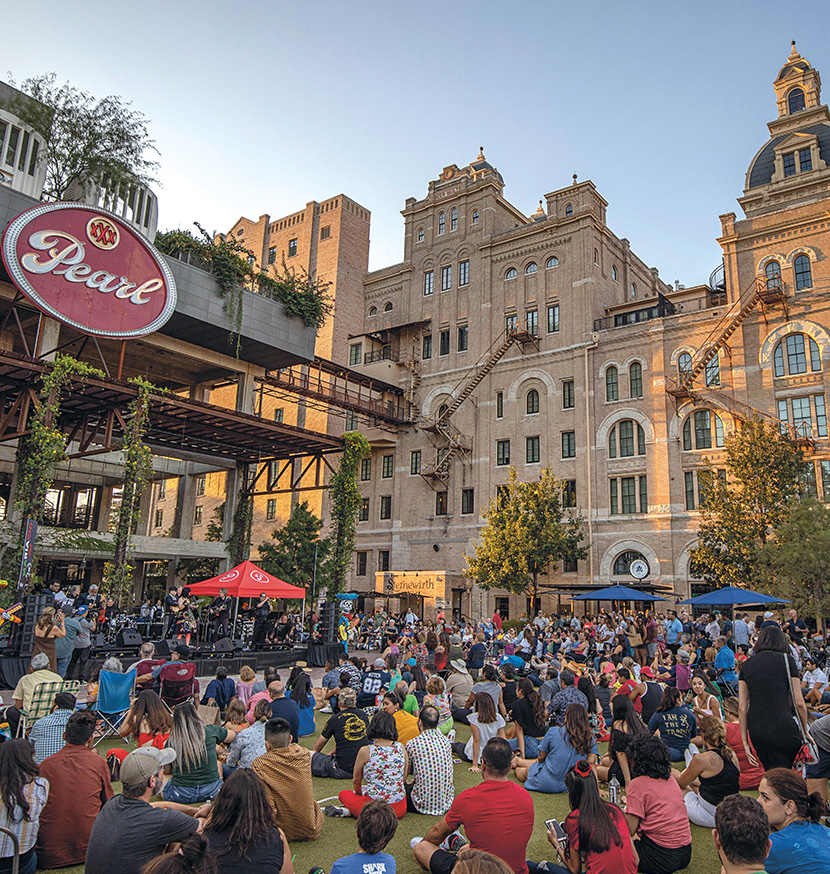
They bring people together. Most of our memories of cities are not really about buildings at all, they are about people. Places become meaningful when they create opportunities for interaction, belonging and shared experience. This isn’t just about programming a plaza or scheduling an event. It’s about designing the conditions in which community can form naturally.
They offer something distinct. In an increasingly competitive development landscape, successful places need a clear point of difference, not novelty for novelty’s sake, but a genuine identity. A reason to choose one place over another. A quality that cannot easily be replicated elsewhere. This is what drives long-term demand, and it is what protects value over time.
Identity matters for this reason above all else. Not because it makes places more marketable, although often it does. Not because it creates better branding, although it can. Identity matters because it creates the conditions for attachment. And attachment, over time, is what determines whether a place thrives or merely exists.
The lesson is not that we should attempt to recreate Rome, London or Potts Point. Nor is it that authenticity can be manufactured through public art, events or marketing campaigns alone. The challenge for developers, for governments, for everyone involved in shaping the built environment is to create the conditions for meaning to emerge.
Australia needs more housing. It needs density. It needs faster delivery. But it also needs places that people will still care about fifty years from now. Because success is not measured by delivery alone, or density alone, or even design alone. It is measured by whether a place becomes part of people’s lives. The places we don’t forget are rarely the ones that were most efficiently planned. They are the ones that meant something. And meaning, it turns out, is not a soft consideration. It is the longest-lasting return on investment there is.
Back